Spirulina: health benefits
With the rise of the supplements industry in recent years, a vast range of supplements is now readily available. With that substantial growth, though, it can be difficult to tell apart the supplements that genuinely work from those that are nothing more […]
With the rise of the supplements industry in recent years, a vast range of supplements is now readily available. With that substantial growth, though, it can be difficult to tell apart the supplements that genuinely work from those that are nothing more than an experiment.
What is spirulina?
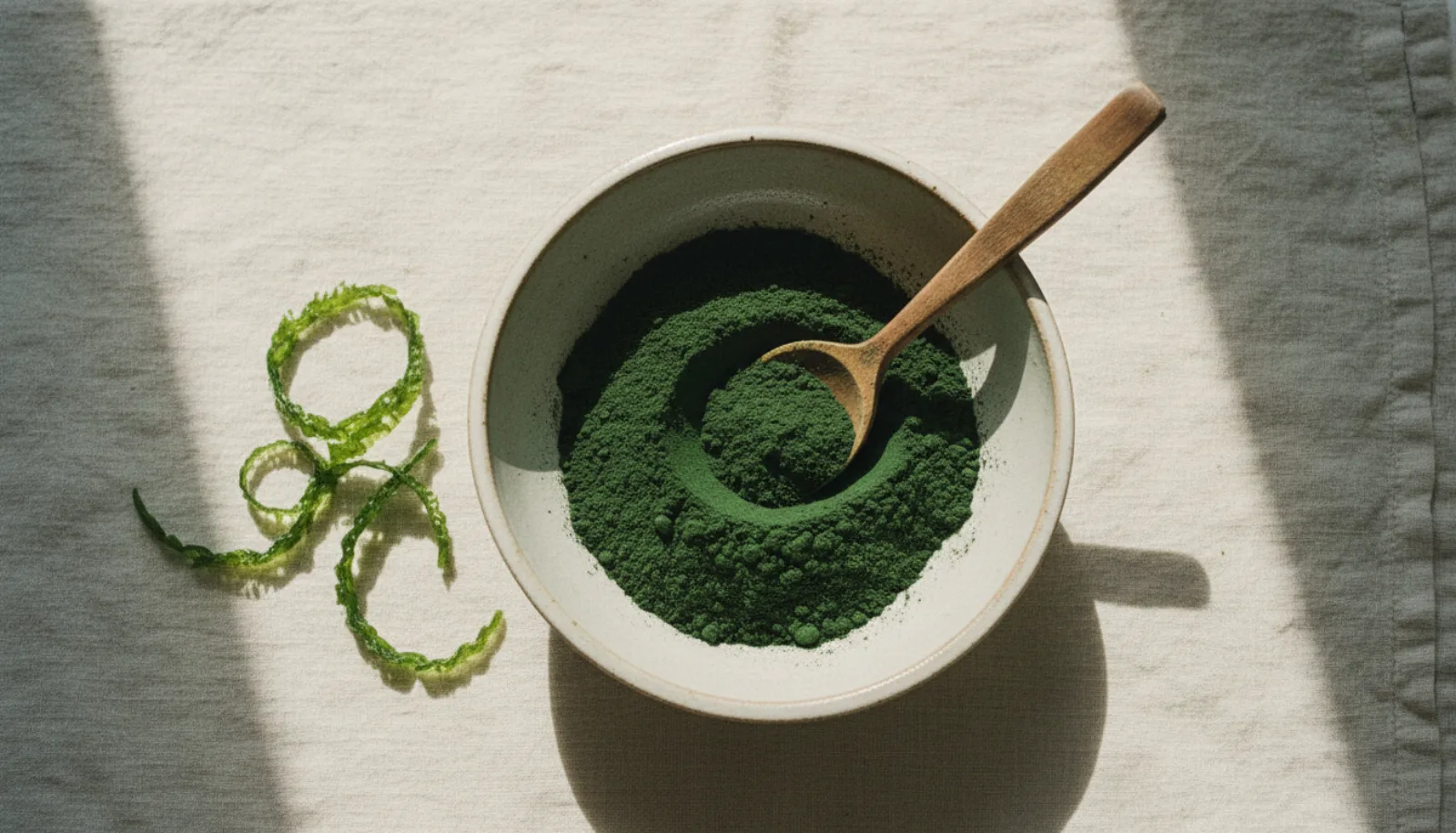
Spirulina is a cyanobacterium, or "blue-green alga", that is safe for humans to eat. Although it can be eaten as a whole food in powder form, it is generally taken as tablets. Spirulina usually grows in lakes and can do so even in extreme climatic conditions. In manufacturing, spirulina is collected, freeze-dried and then sold as a powder or as tablets, added to specific foods and drinks, or used in food supplements. Spirulina is thought to have been used as a food source as early as the sixteenth century and has been associated with health advantages, notably reduced inflammation, lower cholesterol, lower blood pressure and improved immune function.
Nutritional value
Spirulina contains a vast range of antioxidants, vitamins and minerals, all essential to promoting health. A full teaspoon (7 grams) of spirulina contains the following nutrients:
| CIQUAL | CIQUAL | CIQUAL | ANSES | |
|---|---|---|---|---|
| Dried spirulina | /100g | /500mg (1 tablet) | /1g (2 tablets) | /100g |
| Energy (kcal) | 388 | 1.94 | 3.88 | |
| Fibre (g) | 3.6 | 0.02 | 0.04 | |
| Water (g) | 4.68 | 0.02 | 0.04 | |
| Protein (g) | 57.5 | 0.28 | 0.5 | 60 to 70 |
| Carbohydrate (g) | 20.3 | 0.10 | 0.2 | 14 to 19 |
| Of which sugar (g) | 3.1 | 0.015 | 0.03 | |
| Fat (g) | 7.72 | 0.04 | 0.07 | <10g |
| Saturated fat (g) | 2.65 | 0.01 | 0.02 | |
| Monounsaturated fat (g) | 0.68 | 0.003 | 0.006 | |
| Polyunsaturated fat (g) | 2.08 | 0.01 | 0.02 | |
| Calcium (mg) | 120 | 0.60 | 1.20 | |
| Iron (mg) | 28.5 | 0.14 | 0.28 | |
| Copper (mg) | 6.1 | 0.03 | 0.06 | |
| Magnesium (mg) | 195 | 0.98 | 1.96 | |
| Manganese (mg) | 1.9 | 0.01 | 0.02 | |
| Phosphorus (mg) | 118 | 0.59 | 1.18 | |
| Potassium (mg) | 1360 | 6.80 | 13.6 | |
| Sodium (mg) | 1050 | 5.25 | 10.5 | |
| Salt (g) | 2.62 | 0.01 | 0.02 | |
| Zinc (mg) | 2 | 0.01 | 0.02 | |
| Beta-carotene (μg) | 342 | 1.71 | 3.42 | 140 to 170 mg |
| Vitamin C (mg) | 10 | 0.5 | 1 | |
| Vitamin E (mg) | 5 | 0.03 | 0.06 | 100 to 190 mg/kg |
| Vitamin B1 (mg) | 2.38 | 0.01 | 0.02 | 40 to 50 mg/kg |
| Vitamin B2 (mg) | 3.67 | 0.02 | 0.04 | 30 to 45 mg |
| Vitamin B3 (mg) | 12.8 | 0.06 | 0.12 | 130 to 150 mg |
| Vitamin B5 (mg) | 3.48 | 0.02 | 0.04 | 4.5 to 25 mg |
| Vitamin B6 (mg) | 0.36 | 0.001 | 0.002 | 1 to 8 mg/kg |
| Vitamin B9 or folates (μg) | 94 | 0.47 | 0.94 | |
| Vitamin B12 (mg) | 0.1 to 2 mg/kg |
Spirulina has a high protein content of 60 to 70%, far higher than most vegetables. Protein is a key nutrient for recovery and growth. Many studies suggest the regular use of a protein-rich diet.
So for anyone who struggles to eat enough protein each day, taking spirulina or adding it to food and drink can be a quick and easy way to increase daily protein intake.
All the nutrients above play an extremely useful part in maintaining good health. Taking spirulina regularly will ensure you consume a wide range of nutrients in significant amounts, which will considerably benefit your health.
The nutritional value of spirulina
1. An excellent nutritional profile
The three micronutrients found in the greatest quantity in spirulina are potassium, sodium and vitamin A. Potassium and sodium both help regulate fluid balance, muscle contraction and nerve impulses. Vitamin A plays a crucial part in maintaining the health of the organs (heart, lungs, kidneys, liver and so on). It is also needed for vision, reproduction and a healthy immune system. Among the other notable nutrients in spirulina that contribute significantly to health are calcium and magnesium, which help keep bones strong and healthy, regulate heart rate and strengthen the immune system.
2. Cardiovascular health
It has been suggested that spirulina can have a positive impact on the heart by reducing the amount of bad cholesterol and blood pressure. A recent small-scale study looked at the impact of spirulina supplementation on LDL levels and found that taking only 1 gram of spirulina a day over three months reduced participants' LDL levels by 10%.
A few other studies have looked at the effects of spirulina on cholesterol levels using different doses. The results tend to suggest that spirulina can indeed lower LDL levels.
3. Anti-inflammatory properties
Antioxidants protect the body from oxidative stress. Spirulina contains an abundance of antioxidants and taking it regularly can help reduce the impact of oxidative stress, reducing inflammation and the risk of developing chronic disease. The main antioxidant in spirulina is known as phycocyanin, the substance that gives spirulina its blue-green colour. Phycocyanin has been shown to be particularly effective at inhibiting the inflammatory response.
4. Improved performance
Spirulina supplementation can also be useful in physical training. Oxidative stress is a by-product of exercise, so taking a large number of antioxidants can reduce the amount of stress experienced during exercise. A small number of studies have indicated that spirulina can indeed improve strength and endurance, and so improve exercise performance.
The best ways to take spirulina
As noted above, the two most common ways of taking spirulina are:
Tablets
If you regularly take supplements such as multivitamins and fish oils, simply add a spirulina tablet to your routine. The number of tablets you take each day depends entirely on the dose of spirulina you want to reach. In general, a dose of 1 to 8 grams a day has been shown to have a health impact.
Powder
There are many different foods and drinks to which spirulina powder can be added. The most basic method is to mix the powder with water, stir and drink. Be aware, though, that spirulina is generally an acquired taste and it can take time to get used to.
If you find the taste of spirulina too strong or hard to drink, consider adding it to a smoothie or a fruit juice. Not only will the drink become far more appetising, but the added fruit will increase the micronutrient content and so the potential health benefits.
Spirulina can also be added to a number of foods, including salads, broths, soups, stews, pesto, hummus, omelettes and energy balls.
Side effects of spirulina
It is worth noting that a few users of spirulina have reported a small number of unwanted side effects, including headaches, aches, nausea, allergic reactions and insomnia.
People with the condition known as phenylketonuria (PKU) should not take spirulina, since it contains an amino acid called phenylalanine that they cannot break down. People with an autoimmune condition such as multiple sclerosis, lupus or rheumatoid arthritis should also avoid taking spirulina.
Finally, spirulina can interfere with medicines, so it is important that you consult a health professional before starting to take a spirulina supplement.
Summary
Although further research on spirulina is needed to confirm the health effects of supplementation, there appear to be a number of advantages associated with it. That said, it should be taken with care, and people with health problems should consult their doctor before taking spirulina.